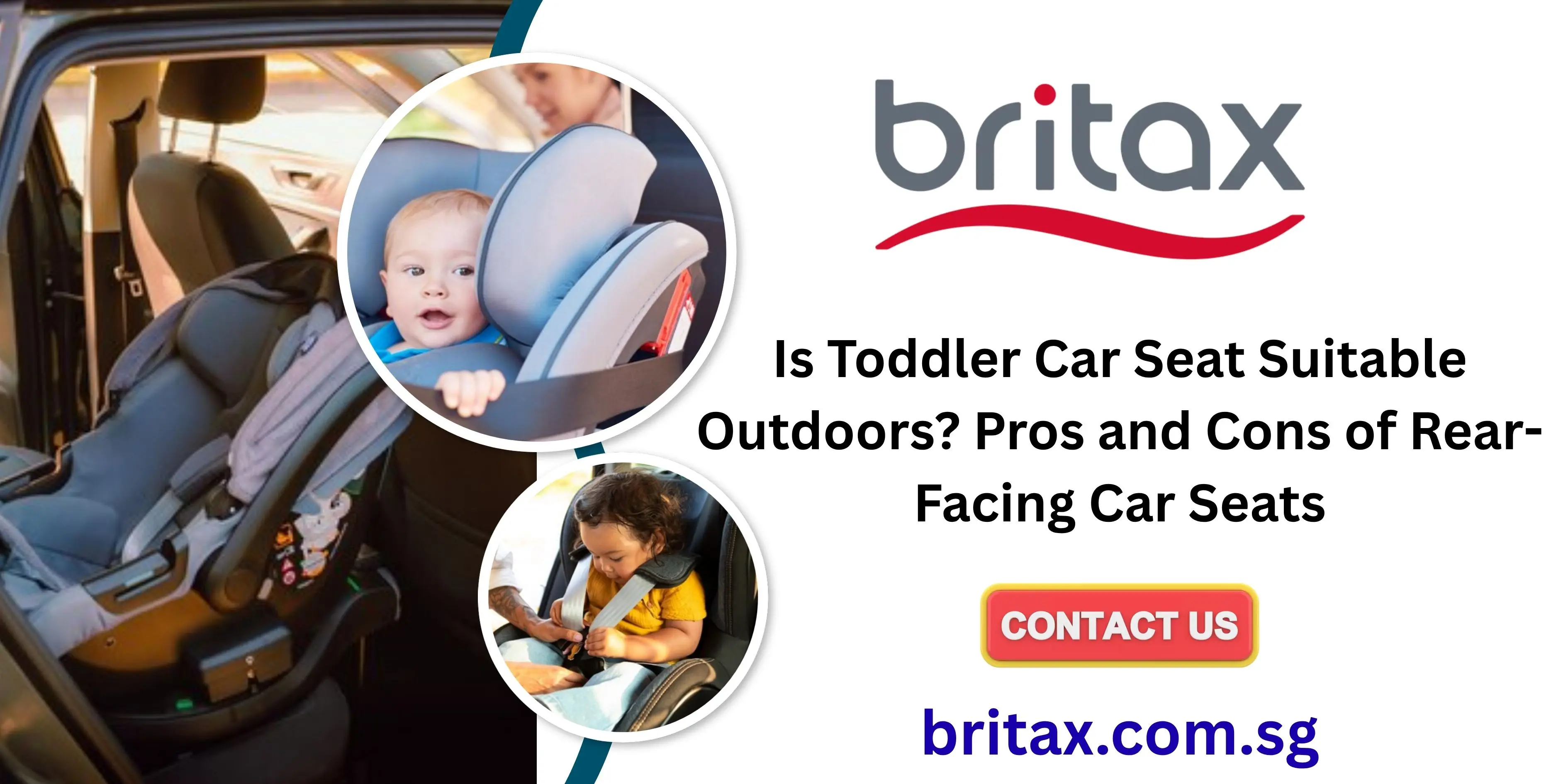
The toddler car seat is one such name given to a safety seat for children, which is meant to secure toddlers in the vehicle. Some of the features of the toddler car seats are a five-point harness system, side impact protection, padded seats, and adjustable straps.
Toddler car seats are built in a way that meets all automobile safety standards, and their primary role is transportation safety and not sitting or engaging in outside activities.
What Is a Toddler Car Seat Designed For?
Toddler car seats, which can be rear-facing, forward-facing, or convertible, are specialized engineering equipment designed to be used only in vehicles. The most important aspect of toddler car seats is their ability to absorb impact in case of a crash.
Key design features include:
Energy-absorbing foam and shell are engineered to suit the crash dynamics of the car
Harness system (5-point harness) that spreads out the impact force on the body
LATCH connections or seat belt slots for safe car mounting
Side-impact wings engineered to fit vehicle dimensions
Recline angle engineered for vehicle placement
All of these characteristics are geared for use in any other environment except outdoor conditions.
Is Toddler Car Seat Suitable Outdoors?
A toddler car seat is generally unsuitable for use outdoors as a seating arrangement. Toddler car seats have been designed to be fitted in a moving vehicle and used for brief travel. Sitting on a toddler car seat outdoors for long periods can make a child feel uncomfortable since toddlers require free movement.
A toddler car seat can be transported outside while transferring a baby from one car to another place, but it cannot serve as an alternative to a stroller, an outdoor chair, or a play seat.
Can You Use a Toddler Car Seat Outside the Car?
Yes, but only for a limited time when it comes to using a toddler car seat in places other than in a vehicle. Some examples of such instances are when you place it somewhere stable when changing the baby or taking a quick break.
A child’s car seat on uneven surfaces outdoors will likely be unstable. Further, sitting for an extended period of time in a reclined position limits a toddler’s mobility.
Why Toddler Car Seats Are Not Ideal for Outdoor Activities
The toddler car seat is designed for a particular purpose; hence, it should be used in vehicle travel and not in any outdoor activity due to various shortcomings.
Limited Movement and Comfort
The kids require space to stretch and explore their surroundings. The use of the car seat helps to keep the toddlers fixed in one place, and this is good for travelling, but not for outdoor activity.
Weather Exposure
The outdoor elements like sunlight, rain, dust, and high or low temperatures can have an effect on the comfort of the child. There are car seats that get too hot under sunlight, and some materials do not give sufficient protection from the outdoor weather.
Lack of Mobility
Toddler car seats lack wheels and other such elements that allow their mobility outdoors. Carrying a toddler car seat for prolonged periods may prove to be difficult for the parents, too.
Incorrect Usage Risks
Taking a toddler car seat out of its intended context could result in more risk because the toddler car seat is designed for use in cars and not outdoors.
When Can a Toddler Car Seat Be Used Outdoors?
Here are some scenarios when using a toddler car seat outdoors would be both logical and justified:
Transferring your child out of the car seat and into another nearby area
Short waiting periods during transportation
Temporary positioning on a level and stable platform
Transportation when the car seat has to be kept connected to a stroller
Nevertheless, it is important that parents keep their children under close supervision and do not leave toddlers alone in a car seat outside of the car.
Safety Tips When Taking a Toddler Car Seat Outdoors
Here are some safety guidelines to be kept in mind when using a toddler car seat outside the car:
Use Only on Stable Surfaces
The car seat must be put on a flat and stable surface and away from high locations or places where the car seat might become unbalanced.
Avoid Long Sitting Periods
A toddler must not stay in a car seat for unnecessarily long hours. Provide regular breaks to move around and stretch.
Protect From Extreme Weather
The toddler must always be kept away from the elements, including too much heat, cold, rain, and sunshine.
Check Harness Position
The harness must continue being appropriately tightened and comfortable in case the child will be seated in the seat for some time.
Never Use a Damaged Car Seat
Look at your toddler car seat for any signs of damage, wear, cracked straps, or any other safety parts that have already expired.
What Is a Rear-Facing Car Seat?
The rear-facing baby car seat is a child restraint system fitted in a motor vehicle with the baby/toddler seated towards the rear end of the vehicle. This seat will protect the baby from all harm by providing proper support to the baby's head, neck, and spine in case of rapid deceleration or accident.
Pros and Cons of Rear-Facing Car Seats
How Long Should a Child Use a Rear-Facing Car Seat?
The period of time to use rear-facing car seats is determined by the child’s height, weight, and the specifications provided by the manufacturer. It is often advised by safety experts to keep a child rear-facing for as long as possible.
Parents are advised not to move their kids to forward-facing seats prematurely. Rather, they should consider the limitations stated by the car seat producer, as well as the suitability of the child for the seat.
Rear-Facing Car Seats vs Forward-Facing Car Seats
Rear-facing seats are made for infants as they offer better protection to their head, neck, and spine. Forward-facing seats are preferred for kids who are older since they develop better body control at that age.
The major difference between the two types of seats lies in the position of the child and how the crash energy is absorbed by the car. In the rearward-facing seat, the movement of the baby is more natural since the baby will move along with the seat when there is a collision.
Conclusion
The rear-facing child seats help protect toddlers as they support the neck and head of toddlers during road trips. However, even though they can be used temporarily outdoors, they are meant to be used indoors and not outdoors for long. The best practice is to use them appropriately and select appropriate products.