
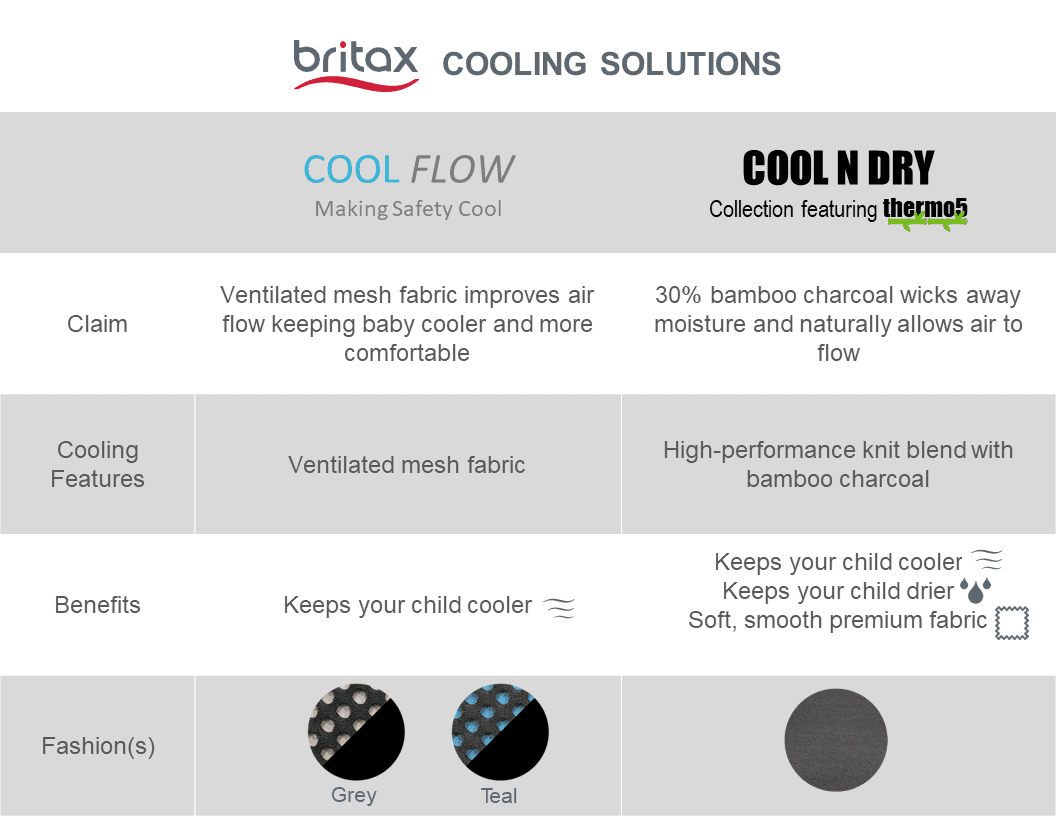
What is the difference between Cool Flow and Cool N Dry?
Is car seat required on the plane?
Check with the respective airlines for their requirements.
Singapore Airline for example, welcome to use approved car seats and FAA, CAA, FMVSS, ECE R44, CMVSS and AS/NZS1754 approved child harness for a child under 3 years of age. The car seat must be able to fit the typical passenger seat, forward facing and seat 2-point harness can be used.
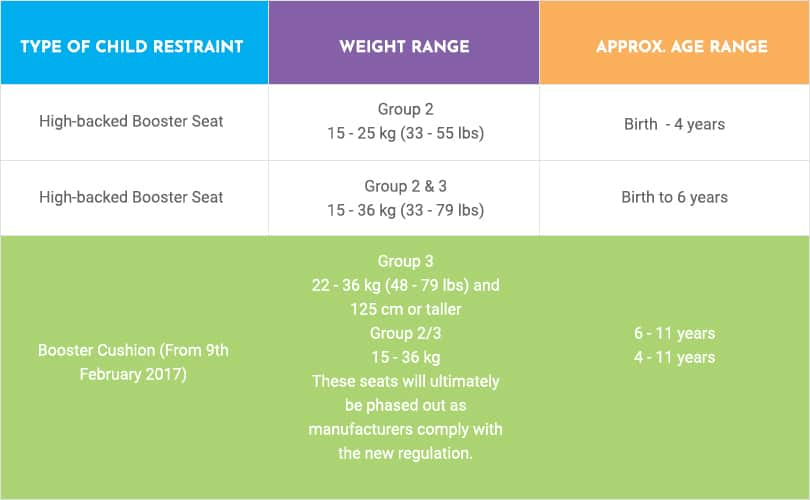
What is the difference between i-size and R44?
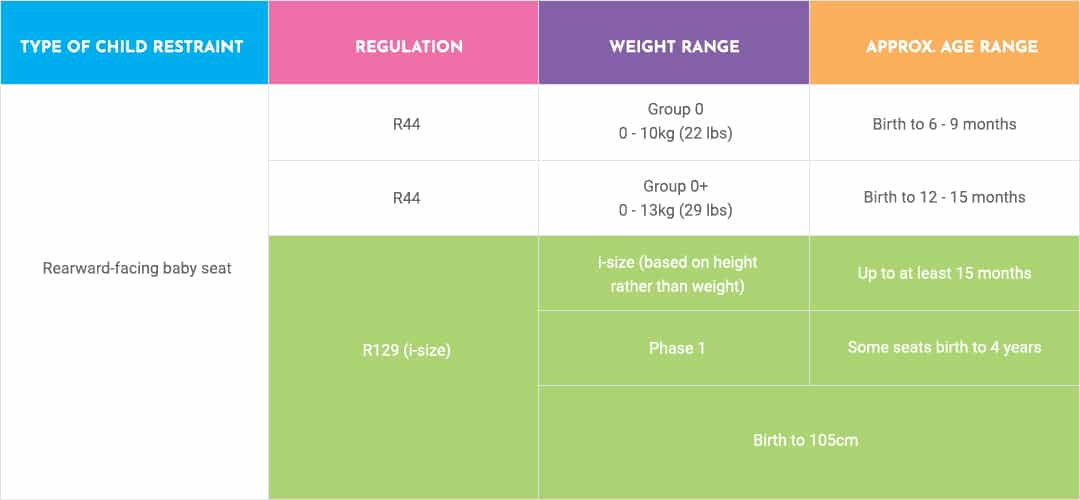
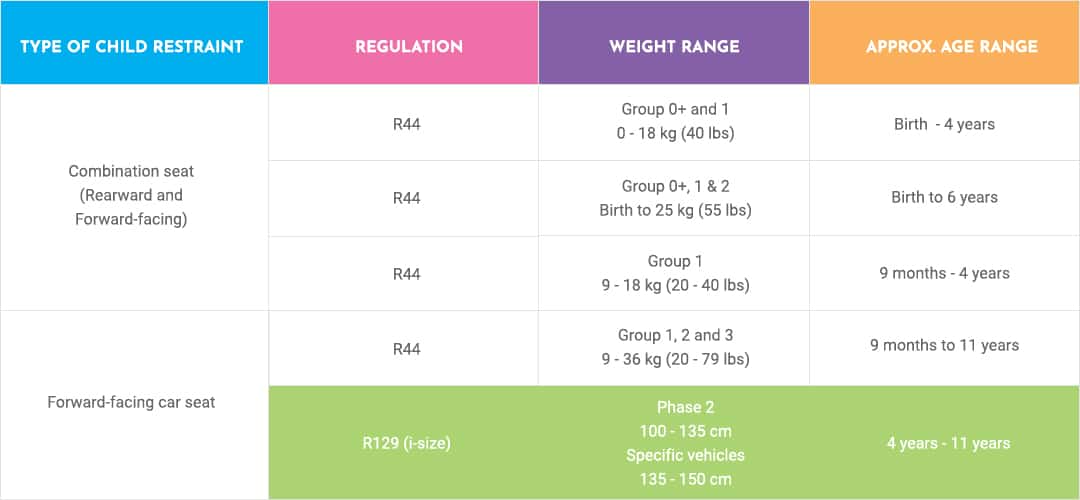 Image Caption
What is an i-size car seat?
i-Size is the new European standard for child car seats. You may not need to replace your car seat now, but when you buy your next car seat, you should consider i-Size. i-Size and ECE R44.04 has been running side by side since 9 July 2013, but a date will eventually be set when i-Size is the ONLY standard. That date has not been set.
What are the type of car seats approved by Traffic Police?
Car seats which meet one or more of the following standards are approved by Traffic Police:
Here's where you can get learn more on the latest for Child Car Seat law in Singapore.
Does private hire car need car seats?
Private hire is not exempt from car seat requirements. According to Land Authority of Singapore, private hire cars, which must be pre-booked, allows passengers to indicate if they require booster seats or child restraints at the point of booking. This gives private hire car drivers sufficient advance notice to prepare accordingly.
Are taxis exempted from the car seat requirement?
Taxis are exempted from the child restraint requirement as it would not be reasonable or practical for public service vehicles to carry a number and variety of child seats of different-sizes that are suitable for children of different ages. Children or persons below the height of 1.35m shall only ride in the rear of the taxis.
Is car seat required by law in Singapore?
According to Singapore Police Force, all persons travelling in vehicles, irrespective of their age, should be appropriately belted up. Adults below the height of 1.35m shall use booster seat or approved adjustable seat belts to lower the risk of injury in the event of an accident.
What are the benefits of extended rearward facing travel?
Car seats are designed to absorb crash forces through the shell of the seat and spread the remaining crash forces away from the child’s body. Rearward facing car seats offer the best protection in the event of frontal collisions – the most frequent type of accident on the roads.*
Physics dictates that in the event of a frontal collision, it is safer for a child to travel in a rearward facing car seat as crash forces are directed to the back of the seat, while the remaining energy is spread evenly across the head, neck and upper body. In a frontal collision with a forward facing seat the energy of the impact is distributed differently across the seat structure and restraint system – potentially resulting in more energy impacting on the child’s body.
Our belief in the safety of extended rearward facing is supported by Swedish government advice and by safety organisations across Scandinavia. Sweden has the lowest car crash fatality rates for children in the world.
We’ve been designing industry-leading car seats for approximately 50 years – and have been championing rearward facing seats in Sweden for over 20 years. During this time we’ve constantly used our learnings to develop innovative ways to make safer, simpler, more flexible products. Our research and development team are continually making advances in energy management – enabling us to enhance the protection that our products offer from every possible angle of impact (including rollovers) in a road traffic accident. We’ve also been able to develop an industry-leading selection of belted seats that enable rearward facing travel beyond the limits of ISOFIX – all the way to 6 years old. Our expertise is regularly shared with governmental bodies and safety experts worldwide.
The PLUS Test is a voluntary test, which sets demanding standards for a seat’s ability to protect the head and neck in frontal collisions. Currently the PLUS Test is carried out on seats designed for the Swedish market – the only country in Europe where parents transport their children solely rearward facing up to four years. Not all child restraint systems have been able to pass the test since its introduction in 2009. Only nine car seats have passed the PLUS Test successfully – including our MAX-FIX II, HI-WAY II and MAX-WAY.
*Casimir “Child Car Passenger Fatalities - European Figures and In-Depth Study”; Alan Kirk; Loughborough University, UK; Conference: Protection of children in cars, Munich, 2011.
What are the legal standards in car seats?
It is mandatory to use child car seats within the EU for all children up to the heights of 1.35m or 1.5m – depending on the member state.
There are currently two legal standards in Europe:
i-Size (this is a new standard for group 0/0+/1 seats that will exist alongside ECE R44/04 for a number of years and sets more advanced safety standards based on more recent safety data).
To meet ECE R44/04 approval car seats are tested in frontal collisions at 50km/h and rear collisions at 30 km/h using crash test dummies and advanced measuring instruments designed to assess the levels of protection each seat offers. ECE R44/04 approved seats can all be identified by their orange approval label.
To determine if a child car seat fits your car, there are 3 types of car seat approvals:
The seat is approved for use in all vehicles that meet ECE R14 and R16 regulations. Any Isofix car seat must use the Isofix anchorage points including the top tether or foot support and the vehicle’s handbook must state that the car is suitable for “Universal Isofix child seats”.
Semi-universal approval is when, in addition to the standard requirements, other safety devices for attaching a seat are used and require additional testing. For example: some vehicles provide additional storage space within or beneath the floor area that can influence the behavior of a child seat foot support, therefore you need to check the child seat manufacturer’s car fitting list for your car type and model.
The child seat is tested in an additional car-specific dynamic crash test and approved only for these cars. The car must be listed in the child seat manufacturer’s car fitting list. This may include special features or designs that can only be installed in a car of a specific type.
i-Size is a new regulation for child car seats that will run in parallel to the current regulation (ECE R44/04) for the next few years. It has been in force since July 9th 2013. We were a major contributor to its development and believe that it will greatly increase protection for little ones across Europe.
The key changes are:
Extended rearward facing travel until a minimum of 15 months
Proven to be the safer way to travel in case of frontal collisions
Added side impact test
To ensure the seat provides better protection in the case of side collisions
ISOFIX only seats
Using our 1997 invention together with Volkswagen to greatly reduce the risk of incorrect installation
Based on the age and size of the child rather than weight
Reflecting the latest safety data and giving parents a clearer indicator of what seat is right for their child and when their child is ready to be moved to the next stage car seat.
i-Size (or ECE R129) approved car seats can be recognized on the orange approval label by the “i-Size” indication. Additionally, one can easily find the appropriate length classification of the car seat on the label. The remainder of the approval label looks alike the ECE R44 label.